Victoria Eugenia's Room
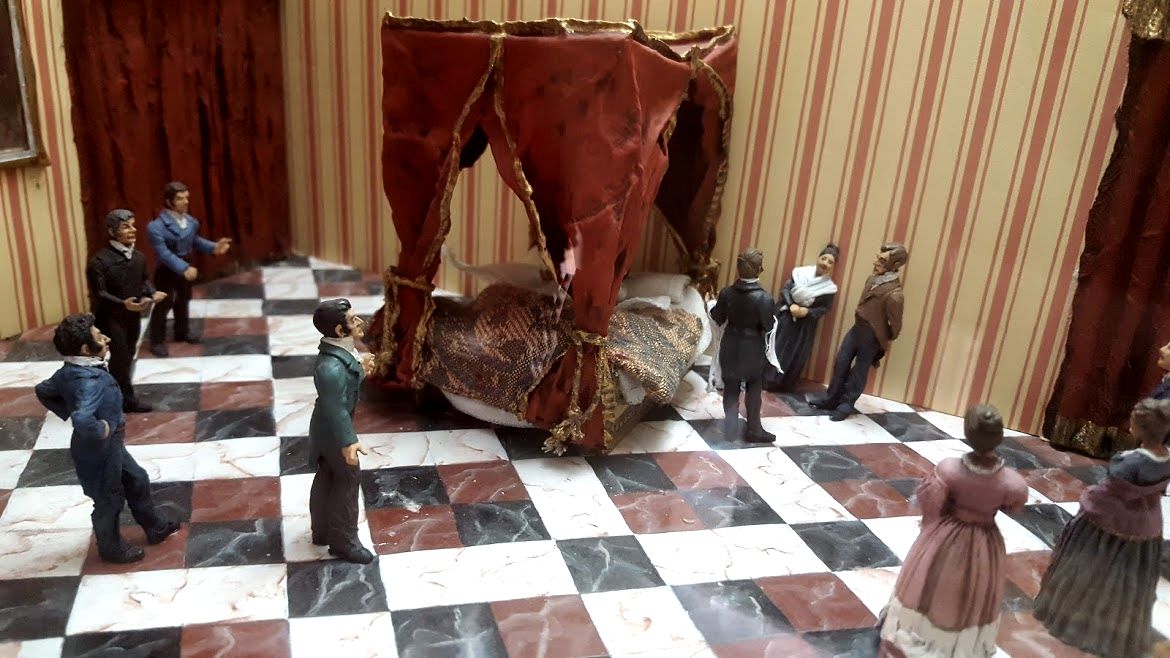
Victoria Eugenia’s room continues the succession of guard changes that began in the Battle of Almansa Room. The period it covers begins with Ferdinand VII and ends with King Alfonso XIII. In this room, we can see a display of infantry and cavalry units in key events from Spanish history, such as the landing of Ferdinand VII at the port of Cádiz—a historical anecdote reflected in the phrase “White hands do no harm,” uttered by Francisco Tadeo Calomarde after Luisa Carlota of Bourbon-Two Sicilies was slapped.
Another interesting diorama on display depicts the phrase “Long live the chains,” a slogan coined by Spanish absolutists celebrating the return of Ferdinand VII and the repeal of the 1812 Constitution—the first Spanish Constitution to be approved by the Cortes.
Looking straight ahead from the entrance, you’ll see the diorama depicting El Abrazo de Vergara—a peace agreement that took place on August 31, 1839, and ended the First Carlist War. These were a series of civil wars that occurred in Spain during the 19th century. After Ferdinand VII’s death, he designated his daughter Isabel—who was a minor—as his successor, placing her under her mother’s regency. The monarch’s brother, Carlos María Isidro, claimed hereditary rights to the throne. Spain was divided into two factions: the Isabelinos (supporters of Isabel) and the Carlists (supporters of Carlos María Isidro).
The diorama depicts the embrace between Generals Espartero and Maroto before the troops of both armies (Carlists and Isabelinos) gathered on the fields of Vergara, marking the confirmation of an agreement reached two days earlier that brought the First Carlist War to an end
The most notable fact about the room we are in is that, during the Second Republic, it was converted into the office of the then-Minister of Justice, García Oliver. The relocation of the Republican government from Madrid to Valencia led to the confiscation or transfer of palaces belonging to wealthy families or the aristocracy for the establishment of government institutions. Such was the case with the palace where we are now, which housed the first anarcho-syndicalist prime minister, Juan García Oliver. In this room, he drafted the laws that, for the first time in Spanish history, granted women full civil rights: the right to travel, to have a bank account, to get a divorce, or to have custody of their children—all without the requirement of obtaining permission from a male guardian. For this reason, this room and the entire building are a historic site for the history of women and civil rights in Spain.