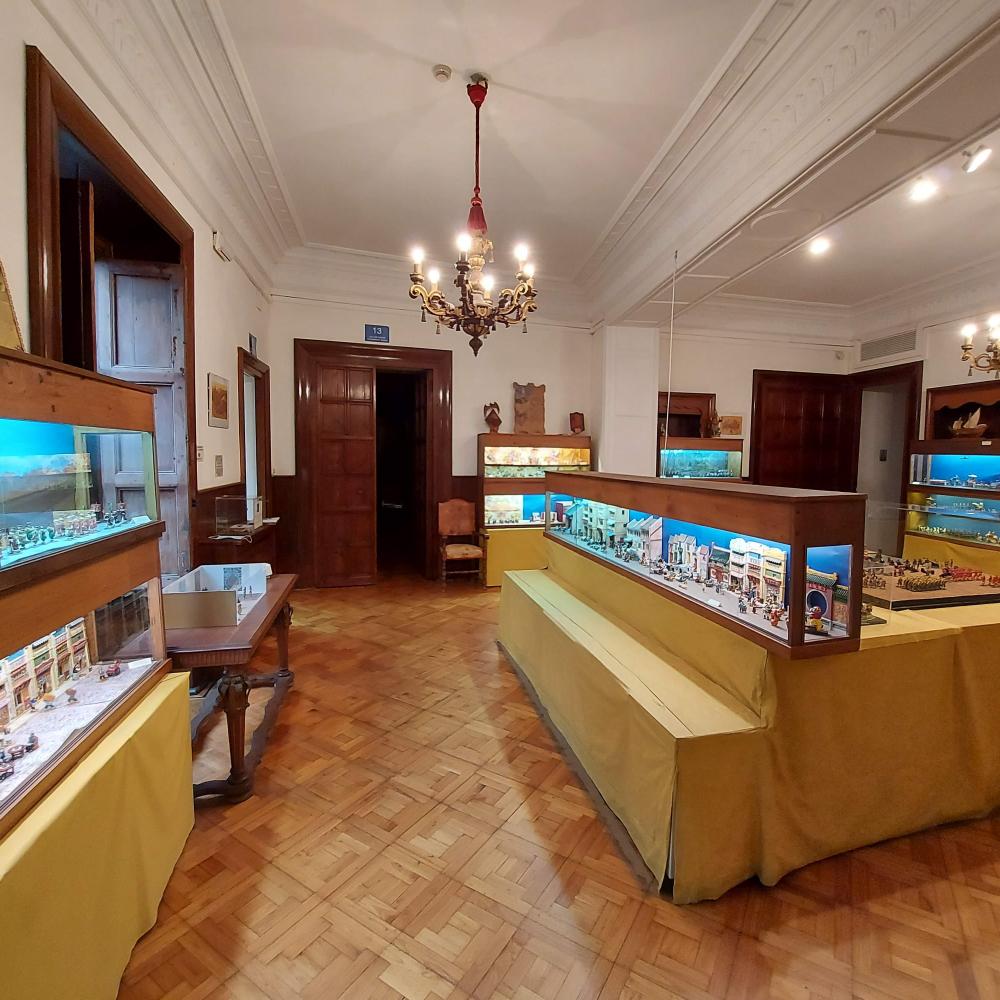
This room, which stands out for its bright colors, is dedicated to the Silk Road, those trade routes that, since the 4th century BC. they connected Europe with Asia and Africa, being silk, invented in China, the main product that was marketed. The commercial transactions that took place between the different countries favored the development and enrichment of other areas such as politics, art or religion.
To illustrate, this room contains scenes from daily life and historical events from countries such as Japan, China, India, Persia or Turkey. Among our dioramas, it is worth highlighting the Durbar Procession, a great parade full of color and opulence, held in 1903, to commemorate the coronation of King Edward VII and Queen Alexandra as Emperor and Empress of India.
In the midst of so much color, we have reserved a space for our falleros and falleras figures. Scenes from the daily life of Valencians are immortalized thanks to manufacturers such as Alymer, Malborough, Trophy, King & Country or Mundiart.
This room was opened in 2006 on the occasion of the proclamation of the city of Valencia by UNESCO as the Capital of Silk.